
ADVOCACY
It’s More Than Just Marketing – How The Meat Industry and Government Manipulate Your Plate
WRITTEN BY ARDEN ANDERSEN, Ph.D., DO, MSPH
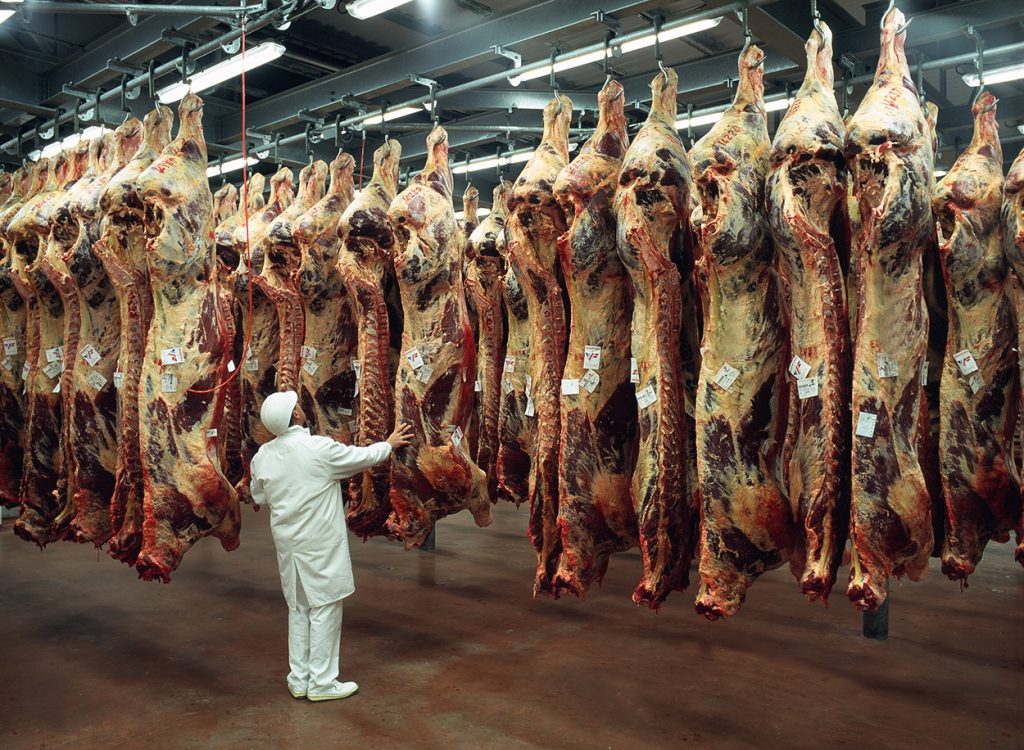
Corporate /government corruption is nothing new. It’s been an abysmal and often purposefully complicated tactic to line the pockets of those at the top and to keep the general public under control. The king of corruptive tactics is the tobacco industry, with others, including meat and dairy industries, now taking notes and following suit.
In the 1950s, about half of the American population were smokers. This wasn’t by accident. For decades, the number of smokers had climbed, so tobacco businesses enjoyed sales of around 20 billion packs of cigarettes a year. But the Big Tobacco never let on that smoking can cause cancer, is addictive, and second hand smoke can cause cancer as well. Instead, full page ads were taken out in newspapers across the country proclaiming smoking as healthy. As time went on, cigarette makers marketed “light” and “mild” versions as safer options. When youth smoking prevention programs were developed, the tobacco industry created counter-campaigns stating government regulations were unnecessary. As I wrote in Learning to Thrive, Philip Morris made a deal with Virginia Commonwealth University: the university supplies ample smoking areas and the corporation will donate millions for research studies as well as fund the Virginia Biotech Research Park, which is closely affiliated with Virginia Commonwealth University and houses several of their research institutes. Perhaps the worst offense happened when Big Tobacco created The Tobacco Industry Research Committee, later the Council for Tobacco Research, which employed industry-friendly special research committees to cast doubt on scientific studies that linked smoking and second hand smoke to many ill-effects and diseases.
Today, only about 10% of Americans smoke. This only came about after people finally understood 1. They were being lied to by the tobacco industry, and 2. They became aware of the actual science.
Again, these manipulative tactics the tobacco industry created are still revered and used by many corporate entities, sometimes those you might not realize, including the meat industry.
You might be saying to yourself, “I love my hamburgers, chicken wings, and bacon. What’s to manipulate?” Well…I’d say the manipulation is working. There are various health and environmental reasons to not eat meat, none of which are all that new to researchers. Cattle use enormous amounts of water from the time they’re born through the processing of their flesh, plus they and the crops grown to feed them take up a lot of land resources which could be used instead for edible crops. Especially red meat, eggs, and pork are high in saturated fats. All animals, whether free-range or otherwise, eat and/or drink pesticide laden foods and water. Meat is an extremely inflammatory food for humans. The proteins from meat must be metabolized into their individual amino acids by our bodies before we can use them, which takes energy (plants are already in the amino acid form). And in these times, it’s important to note how expensive meat is, even when compared to meat alternatives. The list goes on and on. If you haven’t heard of even one of these facts, it’s because the meat industry is good at keeping a BBQ grill and happy faces at the forefront of your mind.
In 2019, the Annals of Internal Medicine printed a study titled Unprocessed Red Meat and Processed Meat Consumption: Dietary Guideline Recommendations From the Nutritional Recommendations (NutriRECS) Consortium. The researchers concluded that people continue their current consumption of both red and processed meat. As a method of measurement, they used the GRADE (Grading of Recommendations Assessment, Development, and Evaluation) criteria, which was mainly developed for evaluating evidence from drug trials (randomized double-blind, placebo-controlled). It’s an inappropriate and irrelevant study model when it comes to looking at food safety and outcomes. It’s like using a math test to determine comprehension of a book you read.
Even though it was an obvious biased trial, the fact that the cancer risk factor increased with more intake of red and processed meats could not be denied. As has been found in many dietary studies, the less people ate red or processed meat, the more they decreased their risk for premature death, cardiometabolic disease, mortality, and cancer. AND YET, the final recommendation from the NutriRECS researchers was to continue to eat red and processed meats.
It’s important to note that NutriRECS is a meat-industry partner panel. And although it’s mandatory for researchers to admit to and list any conflicts of interest, they all listed they had none. The head author had been in trouble for this violation before, as he took funding from McDonald’s and Cargill, one of the world’s largest meat-packers. He also received a grant from Texas A&M AgriLife Research, which gets millions of dollars a year from the meat industry. Another author of the paper is the director of AgriLife.
None of this went over well with fellow scientists. Nutrition researchers were incensed, calling the paper “irresponsible and unethical,” a “travesty of science,” an “assault on public health,” and the “most egregious abuse of evidence” that they had ever seen. They and others, such as a former U.S. Surgeon General, the directors of preventive medicine and nutrition institutes from Harvard, Yale, Tufts, and Stanford, and a former president of the American College of Cardiology, asked the journal to retract the paper before it was published. As a certified clinical nutritionist and consulting pharmacist, I can tell you that it can be difficult to get this many healthcare organizations on the same biochemistry page, but this time it happened – that’s how dark and unethical this is.
So you might think the next move would be a national “less meat” campaign, like we saw against smoking. They could make well known the new Group 1 carcinogen rating for processed meats (smoking holds a Group 1 rating as well) and Group 2A carcinogen rating for most other meats – that’s a big deal. The Surgeon General could require warning labels on every supermarket steak and pack of hotdogs. The dietary guideline for Americans would devise an updated Food Guide Pyramid.
Of course, none of this has come to pass, except the change to the recommended Food Guide Pyramid, or Updated Dietary Guidance.
When Robert Kennedy Jr. took over as the Health Secretary, he vowed to abolish conflicts of interest and do away with funding from industry. As wonderful as that sounds, when developing the Updated Dietary Guidance he ignored the report developed by the 2025 Dietary Guidelines Advisory Committee, which is made up of 20 scientists and nutrition experts. Their report is a multi-year review that, in this case, found the benefits of placing an emphasis on plant-based dietary patterns. Instead, Mr. Kennedy put together a 9 person advisory panel made up of three experts who have received grants or done consulting work for the National Cattlemen’s Beef Association, one of whom also received a research grant from and serves as an adviser to the National Pork Board, three members (including two of the same ones who have done work for red meat groups) who have financial ties to dairy industry organizations, and one who is a co-creator of a high-protein meal replacement product. We ended up with a new Food Guide Pyramid that suggests eating more meat and dairy than ever before. It may seem irrelevant, as you can make your own food choices, but these policies do have influence on people’s eating habits and they are used to determine what is served in government funded entities, such as military bases and schools.
Health Secretary Kennedy seems to be doubling down with his “more meat” influence on social media, sharing his personal switch to the “carnivore diet,” which consists of meat and fermented foods. No fresh fruits, no fresh vegetables, no grains, no beans…Again, many practitioners besides myself have balked at such an extreme, dangerous, and honestly, quite expensive diet. It’s certainly not the type of diet that should get a national platform to encourage it’s widespread adoption.
To recap: we went from the dangers, to covering them up, to manipulation, to exposure of the corruption, to doubling down on the dangerous diet and ignoring the science. To say the least, it becomes frustrating. We expect this consistent behavior from the food industry giants (remember in 1997 the Texas cattle industry sued Oprah for simply discussing mad cow disease), but the insidious involvement of government entities takes it to a new level. This is why it’s so important that we continue to share the real truth, because someday the majority will decide, once again, to stop listening to the lies and start believing the science.
References:
Johnston BC, Zeraatkar D, Han MA, Vernooij RWM,et.al. Unprocessed Red Meat and Processed Meat Consumption: Dietary Guideline Recommendations From the Nutritional Recommendations (NutriRECS) Consortium. Ann Intern Med. 2019 Nov 19;171(10):756-764.
Arends B. ‘Totally bizarre!’ — nutritionists see red over study downplaying the serious health risks of red meat. MarketWatch. January 7, 2020.
New “guidelines” say continue red meat consumption habits, but recommendations contradict evidence. Harvard T.H. Chan. September 30, 2019.
Swift D. Red Meat OK’d in New Guideline But Critics Call Foul. Medscape. September 30, 2019.
Schattenberg P. Texas A&M AgriLife joins international NutriRECS consortium. AgriLife Today. April 16, 2019.
Parker-Pope T, O’Connor A. Scientist Who Discredited Meat Guidelines Didn’t Report Past Food Industry Ties. The New York Times. October 4, 2019.
Dyer O. Food fight: controversy over red meat guidelines rumbles on. BMJ. 2020;368:m397.
Giovannucci E, Rimm E. Red and processed meat consumption and risk for all-cause mortality and cardiometabolic outcomes. Ann Intern Med. 2020;172(7):510-1.
Han MA, Zeraatkar D, Guyatt GH, et al. Reduction of red and processed meat intake and cancer mortality and incidence: a systematic review and meta-analysis of cohort studies. Ann Intern Med. 2019;171(10):711-20.
Alice Callahan and Maggie Astor. (2026, Jan.). Several of Kennedy’s dietary advisers have ties to meat and dairy interests. New York Times